Types of Asbestos
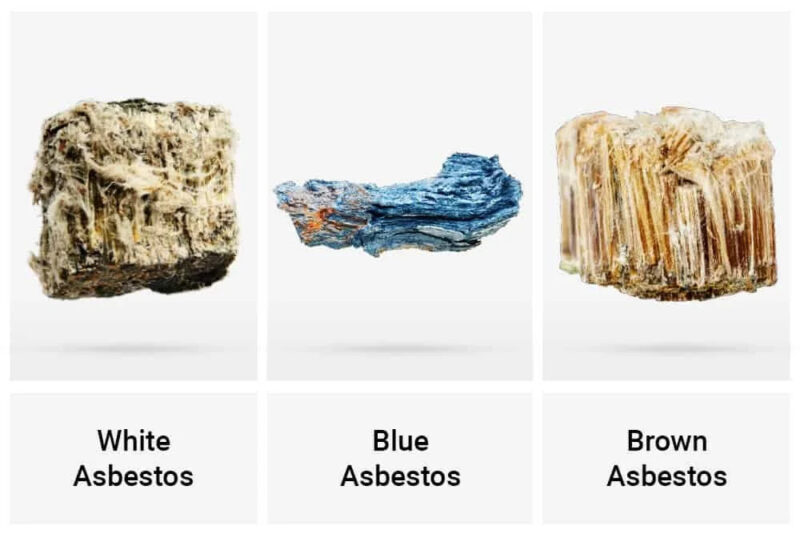
There are three main types of asbestos commonly found in building materials, and while they look different under a microscope, they all pose a health risk when fibres become airborne.
“Asbestos” is a general term for a group of naturally occurring minerals that form long, thin fibres. These fibres are strong, resistant to heat, chemicals, and electricity, and they don’t dissolve in water or break down easily. These properties are exactly why asbestos was so widely used in construction for decades—it was durable, affordable, and versatile.
The three most common types used in Australian building products are:
- White asbestos (Chrysotile)
- Brown asbestos (Amosite)
- Blue asbestos (Crocidolite)
They are often referred to by colour rather than their scientific names, simply because the technical terms are harder to remember.
Chrysotile (white asbestos) is the most commonly used type. Its fibres are soft, flexible, and curved. While it is generally considered less hazardous than the other forms, it is still dangerous when disturbed and inhaled.
The other two types - known as amphibole asbestos - include amosite (brown) and crocidolite (blue), along with less commonly used forms such as tremolite, actinolite, and anthophyllite. These fibres are typically straight, needle-like, and more brittle. Because of their shape, they are more likely to lodge in lung tissue and are considered more hazardous to health.
Crocidolite (blue asbestos) was widely used in the past and is regarded as one of the most dangerous forms due to its very fine, sharp fibres and strong resistance to breakdown.
It’s important to understand that while the types differ in structure and risk level, all asbestos is hazardous when fibres become airborne and are inhaled. There is no safe level of exposure.